High-Performance Hybrid Mobile Apps for Modern Businesses
Build Scalable Hybrid Mobile Apps for Seamless Cross-Platform Performance
Hybrid mobile app development combines web and native technologies to create cost-effective, scalable apps that run smoothly on both iOS and Android from a single codebase.
Start Your Hybrid App Journey
Making Cross-Platform App Delivery More Efficient
High Native Development Costs
Building separate apps for iOS and Android increases cost and time. Hybrid development reduces duplication by using a shared codebase.

Slow Time-to-Market
Traditional app development can delay launches. Hybrid apps enable faster development cycles so businesses can reach users sooner.
Maintenance Complexity Across Platforms
Managing updates for multiple platforms is resource heavy. Hybrid apps simplify maintenance with centralised updates and consistent performance.
Built for Teams That Need Speed and Scalability
1. Startups Launching Their First Mobile App
Ideal for startups that need a cost-effective, fast-to-market mobile solution without compromising user experience, scalability, or future product flexibility.
2. SMEs Expanding to Mobile Channels
Perfect for growing businesses extending web services into mobile apps without maintaining separate iOS and Android development streams.
3. Enterprises Validating New App Ideas
Well-suited for organisations testing new digital products or MVPs before investing heavily in fully native development.
4. Product Teams Seeking Cross-Platform Consistency
Suitable for teams that want consistent UI, performance, and functionality across both iOS and Android ecosystems.
Signs Your Business Needs Hybrid Mobile Development

When Budget Efficiency Is Critical
If building and maintaining two native apps is too costly, hybrid development offers a practical and scalable alternative.

When Speed to Market Matters
When you need to launch quickly to capture users or validate ideas, hybrid apps significantly shorten development timelines.

When Your App Has Standard Feature Requirements
Hybrid works best for apps focused on content, forms, dashboards, and user interactions rather than heavy device-level processing.

When Ongoing Maintenance Needs Simplification
If managing multiple codebases is slowing your team, hybrid apps streamline updates and reduce long-term operational overhead.

When You Need Cross-Platform Consistency
Hybrid development helps maintain similar functionality and user experience across iOS and Android using a shared codebase.
When You Want to Validate a Mobile Product Idea
Hybrid apps enable faster MVP launches, helping teams test product concepts and gather real user feedback early.
End to End Hybrid Mobile App Development Services

Built on a Proven Hybrid App Delivery Framework
Our delivery model combines user-focused design, proven hybrid frameworks, and rigorous testing to create mobile apps that balance speed, reliability, and long-term maintainability.

Requirement-Led Planning
We begin by understanding business goals, user journeys, and technical constraints to define the right hybrid development roadmap.
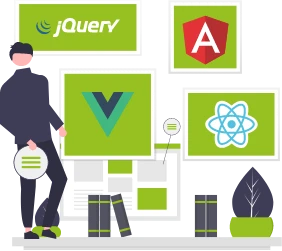
Framework Selection with Purpose
Our experts choose the most suitable hybrid framework based on performance needs, scalability expectations, and future maintenance considerations.
Iterative Development & Testing
We follow agile sprints with continuous testing to catch issues early and ensure stable cross-platform performance.

Seamless Integration & Backend Connectivity
We combine the mobile application with the APIs, enterprise systems and third-party services to guarantee a secure information flow and effective communication with the current business platforms.

Security Checking and Performance Testing
We ensure application performance is optimised across the devices prior to release and ensure security checks to protect user data and ensure solid cross-platform functionality.
Launch Support & Continuous Improvement
After deployment, we monitor usage, fix issues quickly, and optimise the app based on real user behaviour and feedback.
Where Hybrid Mobile Apps Deliver the Most Impact
Start Your Hybrid Mobile App Project Today
Book a Free Consultation
Frequently Asked Questions (FAQs)
What is hybrid mobile app development in simple terms?

Hybrid mobile app development means building one app that works on both Android and iOS using a shared codebase. It saves time, cost, and maintenance effort.
Will a hybrid app perform like a native app?

For most business, e-commerce, and content apps, hybrid performance is very close to native. Only highly graphics-heavy or hardware-intensive apps may require native development.
Is hybrid app development more cost-effective?
Yes. Since developers write one codebase for multiple platforms, development and maintenance costs are usually significantly lower than building two separate native apps.
How long does it take to build a hybrid mobile app?
Timelines vary by complexity, but hybrid apps typically launch faster than native apps because much of the code is shared across platforms.
Can my hybrid app scale as my business grows?
Absolutely. When built with the right architecture and framework, hybrid apps can scale to support growing users, features, and integrations over time.