
 Share
Share Post
Post Tweet
Tweet Copy
CopyRelated Articles

Artificial Intelligence
RSK BSL Tech Team
August 14, 2026
|
|

Artificial Intelligence
RSK BSL Tech Team
August 11, 2026
|
|

IT Outsourcing
RSK BSL Tech Team
August 8, 2026
|
|

Artificial Intelligence
RSK BSL Tech Team
August 5, 2026
|
|

Artificial Intelligence
RSK BSL Tech Team
August 2, 2026
|
|

Artificial Intelligence
RSK BSL Tech Team
July 30, 2026
|
|

Hire resources
RSK BSL Tech Team
July 27, 2026
|
|

IT Outsourcing
RSK BSL Tech Team
July 24, 2026
|
|

Artificial Intelligence
RSK BSL Tech Team
July 21, 2026
|
|

Hire resources
RSK BSL Tech Team
July 17, 2026
|
|

Mobile Application Development
RSK BSL Tech Team
July 14, 2026
|
|

Infographics
RSK BSL Tech Team
July 11, 2026
|
|

Software Development
RSK BSL Tech Team
July 9, 2026
|
|

Hire resources
RSK BSL Tech Team
July 6, 2026
|
|

IT Outsourcing
RSK BSL Tech Team
July 3, 2026
|
|

Artificial Intelligence
RSK BSL Tech Team
July 1, 2026
|
How to choose between generative AI and Agentic AI
Artificial Intelligence is no longer a project, it is active. In 2024, an increase in the number of organisations worldwide is reported as 78% reported the use of AI in at least one business activity compared to 55% the previous year. More shocking, 71% of businesses are currently utilising generative AI tools, increasing adoption over a year by more than a factor of two.
However, with AI becoming both more curious and more of a core infrastructure, another and more complicated question has arisen: Should you invest in Generative AI or is it time to jump to Agentic AI?
On the one hand, Generative AI has quickly revolutionised the process of creating content, writing code, researching, and customer service. By 2024, the world generative AI market had increased to $ 36 billion and is expected to surpass $ 1 trillion in 2033, showing a phenomenal demand in all industries.
Conversely, Agentic AI systems able to make autonomous decisions and achieve goals has become a reality of production instead of just a theory. The agentic AI market will increase to more than 93 billion by 2032 (a growth of 44% CAGR) due to enterprise demand to have automation, and not just responsive automation, but agentic automation that takes action. Indeed, 62% of organisations are already trying AI agents, as McKinsey 2025 global survey indicates.
This guide will dissect the differences in practice between Generative AI and Agentic AI. By clarifying when each method is appropriate, and provides an understandable decision-making framework to guide leaders, builders and strategists to select the appropriate course of action depending on the goals of the business.
What Is Generative AI?
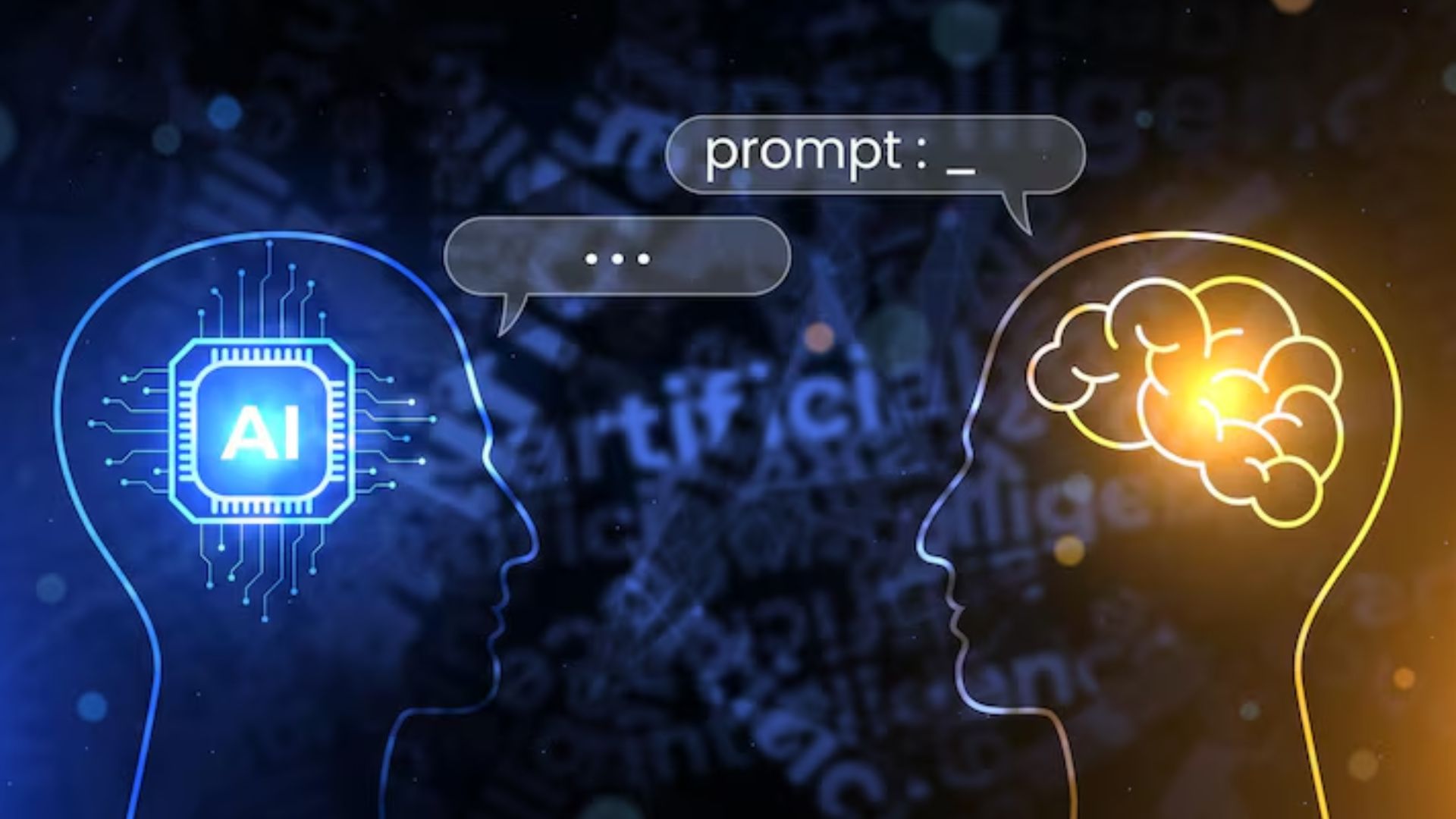
Generative AI is a type of artificial intelligence system that is programmed to generate new content (text, images, code, audio or video) from patterns learned through large volumes of data. It applies machine learning models, particularly large language models (LLMs) and diffusion models, to produce outputs that are similar to the content created by humans.
Generative AI is fundamentally reactive and not autonomous. It must wait till a user provides a prompt or input and generates an output due to probabilities that makes it very strong in creativity, analysis, and support. But it is naturally subject to human guidance.
How Generative AI Works
Generative AI models are trained on huge amounts of data to be able to learn:
- Language structure and semantics.
- Pictorial and sound patterns.
- Code syntax and logic.
- Contextual relationships across domains.
These models can produce content after they are trained based on the most probable next output given an input prompt, context or example.
Typical Generative AI examples:
- Text generation (blog writing, reports, emails, chatbots)
- Code generation and debugging.
- Image and video creation.
- Summary and inference of data.
- Customer service response and copilots.
What Is Agentic AI?
The term agentic AI can be used to refer to a category of artificial intelligence systems that are not only designed to produce responses but also behave independently towards goals. The agentic AI systems have the capacity to plan, take decisions, perform actions, and adjust themselves according to the feedback and in many cases with limited or no human interference.
How Agentic AI works
At a high level agentic AI is a system that integrates a set of technologies into a coordinated system:
- Goal interpretation reasoning engines (usually driven by big language models).
- Arrange mechanisms in planning activities and dependencies.
- Layers of execution that communicate with actual systems (e.g., CRMs, ticketing tools, cloud services)
- Feedback loops that evaluate success or failure and determine future actions.
This architecture enables agentic AI to operate at several steps and decision points, instead of generating a single fixed output.
The examples of Agentic AI include:
- End to end problem solving autonomous customer service agents.
- Infrastructure monitoring AI systems that cause remediation actions.
- Sales and revenue agents that qualify Sales and revenue agents update CRM records
- HR onboarding or compliance or procurement workflow orchestration agents.
- Code change agents that plan, write, test, and deploy code changes.
Key Differences between Generative and Agentic AI
1. Purpose Content Generation vs Goal Execution
Generative AI
It is programmed to generate the content like text, pictures, code, summaries, or recommendations according to user input. It is mainly an assistive and supportive tool which helps humans to think, write, analyses and create more effectively. Generative AI complements human creativity and decision-making by generating outputs that can be reviewed, refined, and acted upon by the users.
Agentic AI
It is configured to implement objectives and not produce isolated results. It reads high-level goals, sets a plan of action and executes an activity across systems with the minimum human intervention. Rather than helping in the steps involved, agentic AI is concerned with end-to-end results.
2. Level of Autonomy
Generative AI
It operates in a reactive manner. It involves a stimulus or prompting by a human being in order to be initiated, generates a response and ceases. The model does not start working or work further after the immediate interaction, which makes the control tightly held by the user but not independent.
Agentic AI
It will work constantly after setting a goal. It is capable of taking actions, tracking progress and also changing strategies depending on evolving circumstances or midway outcomes. It operates independently within several steps, instead of halting after the first response and makes decisions and amendments as necessary.
3. Human Involvement
Generative AI
It keeps humans firmly “in the loop.” Generative systems are suitable in advisory and creative work since the AI assists human judgment, but does not substitute it.
Agentic AI
It transports humans round the loop. The performance is mostly monitored by humans in this model, exceptions are reviewed and only interventions made when absolutely required, allowing AI systems to scale and be supervised, not controlled.
4. Intelligence style: Reacting vs Proactive
Generative AI
It is essentially responsive. It reacts to the inputs as they come and does not have any long-term purpose or ambitions. All interactions are to a large extent self-contained and the model does not plan ahead to take future steps or actions other than the action at hand.
Agentic AI
It is future oriented and proactive. It rationalises about objectives, can foresee the next action and takes initiative to get towards a goal. This prospective behaviour enables agentic systems to control workflows, solve complex problems, and dynamically change as situations change.
5. Infrastructure and Technical Complexity
Generative AI
The scale and deployment of it is comparatively easier. It is implemented in many organisations by APIs, clouds or SaaS solutions and little to no integration with the core operations. There are also governance requirements, which are typically less rigorous, targeting data privacy, accuracy of content, and ethical use.
Agentic AI
It involves more complicated infrastructure relies on orchestration layers, integration of tools, system permissions, and monitoring systems to safely perform actions. Such complexity makes implementation more difficult but facilitates automation of enterprise systems and business processes.
6. Risk Profile
Generative AI
It mainly presents content related risks, including false result, hallucination, prejudiced answers or misuse of information generated. These risks are more easily identified and managed since they are still executed by humans.
Agentic AI
It brings about operational risk. Due to its ability to execute independent actions, the errors can spread throughout systems, processes, or customers in case of inadequate safeguards. Consequently, agentic AI requires more vigorous controls, auditability, and escalation procedures to guarantee that it is safely deployed.
7. Business Impact
Generative AI
It normally provides incremental productivity gains. It can be used by organisations to accelerate writing, code, research, and communication with customers and analysis, and is often applied to particular functions, not to whole workflows.
Agentic AI
It is transformational in nature. It has the ability to redefine the way work is done, decrease the cycle times, and allow full-scale operations by automating decision-making and execution. That is why more and more businesses start to consider agentic AI as independent online employees but not a tool.
Decision Framework: How to Decide Between Generative and Agentic AI
1. What Outcome Do You Need?
Use Generative AI when you want to generate or help in generating such as content, information analysis, or human decision-making.
Use Agentic AI when you need to perform and achieve results like issue resolutions, workflow procedures, or processes of any kind.
2. What Amount of Autonomy is Tolerable?
Generative AI is the appropriate option in case you require AI to perform only when demanded and end once it produces an output.
When you feel good with AI taking action on its own when there are goals and guardrails, then Agentic AI is more appropriate.
3. Work Task or Goal Based?
Generative AI is most effective in discrete, task-based tasks- writing, summarising, coding, or answering questions.
Goal based work with several steps, choices and dependencies are better handled by agentic AI.
4. Who are to be the Work-Drivers?
Apply Generative AI to situations where humans stay in the loop, making decisions, reviewing, and taking action on results.
Apply Agentic AI when humans are on the loop with set objectives and results but do not control all the steps.
5. Risk and Governance Readiness What Is yours?
Generative AI is more applicable in less-risk and less-governance environments.
The agentic AI needs to be well guard railed, monitored, and have escalation protocols, because it is capable of making autonomous decisions.
Real-life Applications
Generative AI: Helpful Use Cases
- Write marketing materials like blogs, emails, product descriptions and social posts.
- Helps the developers with code generation, debugging tips, and documentation.
- Concisely summarises reports, contracts, meeting notes, and large documents.
- Powers customer service chatbots, which respond to frequently asked questions and propose answers to customer agents.
- Helps analysts discern insights, trends and explanations out of complex datasets.
- Works as a copilot to research, brainstorming, and decision support.
Autonomous Use Cases Agentic AI
- End-to-end Customer issue resolutions with no human intervention.
- Monitors IT systems and automatically instigates remedial measures.
- Coordinates processes such as onboarding, procurement, or compliance checks.
- Automates the sales operations, including lead qualification, follow ups and CRM updates.
- Does multi step software engineering (plan, code, test, deploy).
- Manages processes of operations tools, systems, and teams.
Conclusion
The decision to use Generative AI or Agentic AI is a strategic choice based on business motive, rather than technology trends. Generative AI development services is more effective at enhancing human abilities, enabling individuals to think quicker, more inventive, and make wise choices. Instead, agentic AI is created to operate autonomously, handling workflows and initiating results with limited human participation. Tactics that further integrate both strategies are usually the best in organisations that are well developed in their AI journey. That is Generative AI to reason and have insight, and Agentic AI to act and scale. The trick is to be clear, know your objectives, risk profile, and preparedness before you select or bundle them.
Related Posts

Posted By RSK BSL Tech Team on August 14th, 2026
Enterprise AI Development Services for Modern Businesses: A UK Buyer’s Guide for 2026
Posted By RSK BSL Tech Team on August 11th, 2026
Agentic AI Explained: Benefits, Use Cases & Examples

Posted By RSK BSL Tech Team on August 8th, 2026
Hire AI Engineers in the UK: Cost, Skills & Process in 2026

Posted By RSK BSL Tech Team on August 5th, 2026