
 Share
Share Post
Post Tweet
Tweet Copy
CopyRelated Articles

Artificial Intelligence
RSK BSL Tech Team
August 14, 2026
|
|

Artificial Intelligence
RSK BSL Tech Team
August 11, 2026
|
|

IT Outsourcing
RSK BSL Tech Team
August 8, 2026
|
|

Artificial Intelligence
RSK BSL Tech Team
August 5, 2026
|
|

Artificial Intelligence
RSK BSL Tech Team
August 2, 2026
|
|

Artificial Intelligence
RSK BSL Tech Team
July 30, 2026
|
|

Hire resources
RSK BSL Tech Team
July 27, 2026
|
|

IT Outsourcing
RSK BSL Tech Team
July 24, 2026
|
|

Artificial Intelligence
RSK BSL Tech Team
July 21, 2026
|
|

Hire resources
RSK BSL Tech Team
July 17, 2026
|
|

Mobile Application Development
RSK BSL Tech Team
July 14, 2026
|
|

Infographics
RSK BSL Tech Team
July 11, 2026
|
|

Software Development
RSK BSL Tech Team
July 9, 2026
|
|

Hire resources
RSK BSL Tech Team
July 6, 2026
|
|

IT Outsourcing
RSK BSL Tech Team
July 3, 2026
|
|

Artificial Intelligence
RSK BSL Tech Team
July 1, 2026
|
Generative AI vs agentic AI: what's the difference and which does your business need?
The use of Artificial Intelligence is accelerating at an unprecedented rate, and many companies are grappling with the question of where to invest next. Indeed, around 78% of the organisations are already using AI to improve in one crucial business process, which is just another proof that AI has been incorporated into the business activities of today. The demand to Hire AI engineers who possess knowledge about new technologies is on the rise as businesses strive to innovate and scale. Today, there are two concepts that are prominently discussed: generative AI and agentic AI. They might seem to be the same thing, but they have different uses and knowing the difference is important when selecting the right solution for your business.
What is Generative AI
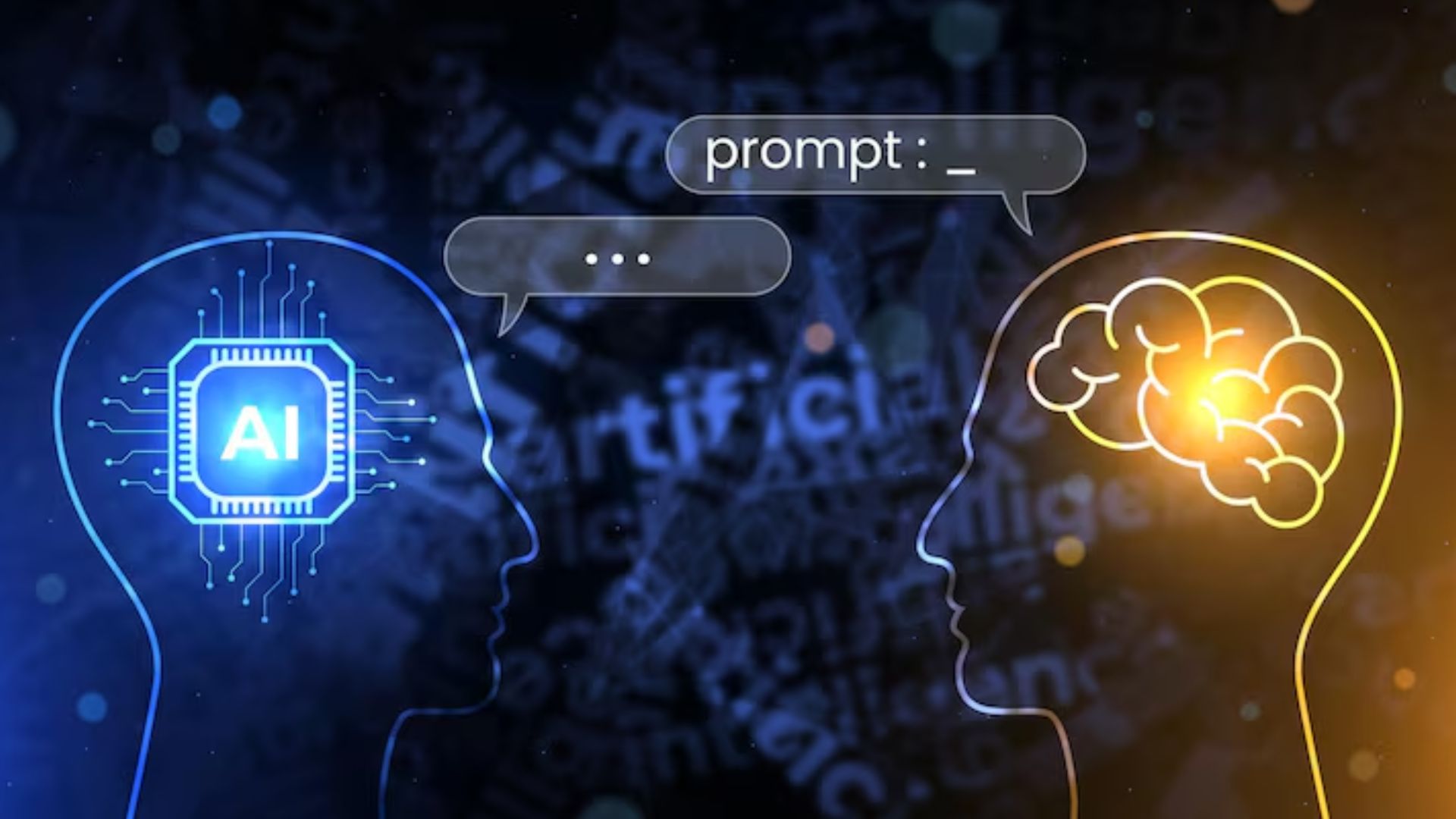
Generative AI is the first step for a majority of businesses. It is defined as AI systems that generate new content like text, images, code, or video based on a user’s prompt. These systems are meant to help human and are very reliant on instructions and inputs.
Generative AI is more reactive than agentic AI, which is able to act independently. It only relies upon specific requests and does not initiate activities or tasks. It’s great for boosting productivity and creativity and not much use for end-to-end workflows without human interaction.
What is Agentic AI
Agentic AI marks a higher level of AI usage, where AI systems can autonomously execute tasks to attain goals. Agentic AI can go beyond just creating content from prompts and plan, decide, and take action without extensive human involvement. It was meant to be used in more of a “digital agent” fashion, which is able to perform workflows end-to-end.
Within the generative AI vs agentic AI discussion, the key difference is autonomy. Agentic AI is not reactive, it’s proactive. It is not only reacting to orders, it can be proactive and react to changing circumstances and continually strive to achieve an aim. This makes it a valuable tool for companies aiming to streamline intricate workflows and minimise manual monitoring.
Key Differences Between Generative AI and Agentic AI
1. Purpose:
Generative AI is geared towards producing content like text, images, and code.
Agentic AI is action oriented and about accomplishing specific tasks.
2. Working Style:
Generative AI is responsive and reacts to the user’s prompt.
Agentic AI is proactive and can take initiative.
3. Level of Autonomy:
Generative AI is an ongoing process that involves human action.
Agentic AI can operate either independently or semi-autonomously.
4. Decision-Making Ability:
Generative AI has limited decision-making capability.
Agentic AI can interpret the scenario and make well-informed decisions.
5. Task Execution:
Generative AI handles single-step outputs.
Agentic AI streamlines and automates complex processes end-to-end.
6. Human Involvement:
Generative AI requires continual management.
Agentic AI minimises the necessity of constant human intervention.
7. Business Impact:
Generative AI enhances creativity and productivity.
Agentic AI is responsible for automation and operational efficiency.
When to Use Generative AI
1. Content Creation Needs:
Leverage generative AI in cases where content creation for blogs, emails, product descriptions, or social media posts is a critical component of your business operations.
2. Boosting Team Productivity:
Best for groups looking to streamline time-consuming creative activities such as summarising, editing, or drafting.
3. Early-Stage AI Adoption:
Ideal for organisations that are new to AI and want to implement low tech solutions that get them quick results.
4. Human-in-the-Loop Workflows:
Best for situations when human input, creativity and approval is still crucial in the process.
5. Creative and Marketing Functions:
Great for marketing, design, and content teams when they need inspiration, variations and quick experimentation.
6. Code and Technical Assistance:
Useful for developers who require assistance in coding, debugging or documentation.
7. Low-Risk Automation:
Appropriate when choices are not required, but support and assistance in content is needed.
When to Use Agentic AI
1. End-to-End Process Automation:
Use agentic AI when you need systems that can handle entire workflows independently, from initiation to completion without constant human input.
2. Reducing Operational Workload:
For companies seeking to streamline and automate multi-step processes like data processing, reporting, or customer interactions without manual involvement.
3. Complex Decision-Making Scenarios:
Ideal for analysis, decision making and adjusting actions as a response to changing circumstances.
4. Scaling Business Operations:
Beneficial for companies that require rapid expansion, where manual control becomes inefficient, and automation is essential.
5. Autonomous Customer Interactions:
Ideal for more complex customer support systems that may resolve inquiries, escalate problems, and follow up automatically.
6. Sales and Revenue Operations:
Supports AI agents in identifying leads, reaching out, monitoring responses, and improving interactions without constant monitoring.
7. Continuous Monitoring and Optimisation:
Provides efficient operation, performance monitoring and real-time action adjustment in systems that must run around the clock.
Decision Framework: When to Use Generative AI vs Agentic AI
There are three critical factors: task complexity, autonomy, and responsibility for outcome when choosing between generative AI versus agentic AI. Businesses tend to pick the wrong strategy because of not knowing about the strategy, but they use a tool they are familiar with, not one that is suitable for the job.
-
Use Generative AI when tasks are bounded and reviewable:
Use generative AI when a specific output is required and the output is subject to validation prior to use. For instance, writing reports, developing marketing materials, or synthesising research. In these cases, errors (like hallucinations or quality gaps) are visible and can be corrected before impacting the business.
-
Use Agentic AI when tasks are multi-step and recurring:
Agentic AI is ideal for workflows that require multiple steps, are process-oriented, and repetitive, like data aggregation, handling customer queries, or monitoring competitors. In this case, the value is given by the automation of execution, and humans monitor the outcome, but not every step.
Assess the cost of failure:
For an incorrect output that impacts a single deliverable, generative AI will be enough. However, Agentic AI should be approached with care and guardrails when it comes to taking actions that cannot be easily undone.
Determine the frequency and scale of tasks:
If a task is one-off or happens from time to time, then don’t use agentic systems. Agentic AI’s continuous nature, however, provides a huge advantage for high volume, recurring workflows.
Consider autonomy vs control:
Where structured supervision is needed, and human review, validation and approval of the output is required in workflows, generative AI is the more suitable option. However, if your organisation can handle self-sufficiency and independent work within specified limits, agentic AI might be a better option.
Hybrid Approach:
Many enterprise AI implementations are hybrid, in that generative AI and agentic AI are not at odds but rather complement each other. Choosing between generative AI and agentic AI depends on three factors: complexity of the task, autonomy level, and the responsibility for the outcome. Many times, businesses fail to do the right thing, even though they do know about it, but rather they choose to use a tool that they know versus a proper tool.
Conclusion
With its continued evolution, it’s a strategic need to understand the difference between generative AI and agentic AI. Generative AI helps teams to work faster and smarter, and agentic AI streamlines and scales without humans. The true benefit of knowing is when and how to use each one effectively and how to mix them. This combination of the two has already been used by the top Artificial Intelligence Companies to foster innovation and efficiency. For businesses seeking to remain competitive, the focus should not only be on adoption, but on the selection of the right AI that aligns with their objectives.
Related Posts

Posted By RSK BSL Tech Team on August 14th, 2026
Enterprise AI Development Services for Modern Businesses: A UK Buyer’s Guide for 2026
Posted By RSK BSL Tech Team on August 11th, 2026
Agentic AI Explained: Benefits, Use Cases & Examples

Posted By RSK BSL Tech Team on August 8th, 2026
Hire AI Engineers in the UK: Cost, Skills & Process in 2026
Posted By RSK BSL Tech Team on August 5th, 2026