
 Share
Share Post
Post Tweet
Tweet Copy
CopyRelated Articles

Artificial Intelligence
RSK BSL Tech Team
August 14, 2026
|
|

Artificial Intelligence
RSK BSL Tech Team
August 11, 2026
|
|

IT Outsourcing
RSK BSL Tech Team
August 8, 2026
|
|

Artificial Intelligence
RSK BSL Tech Team
August 5, 2026
|
|

Artificial Intelligence
RSK BSL Tech Team
August 2, 2026
|
|

Artificial Intelligence
RSK BSL Tech Team
July 30, 2026
|
|

Hire resources
RSK BSL Tech Team
July 27, 2026
|
|

IT Outsourcing
RSK BSL Tech Team
July 24, 2026
|
|

Artificial Intelligence
RSK BSL Tech Team
July 21, 2026
|
|

Hire resources
RSK BSL Tech Team
July 17, 2026
|
|

Mobile Application Development
RSK BSL Tech Team
July 14, 2026
|
|

Infographics
RSK BSL Tech Team
July 11, 2026
|
|

Software Development
RSK BSL Tech Team
July 9, 2026
|
|

Hire resources
RSK BSL Tech Team
July 6, 2026
|
|

IT Outsourcing
RSK BSL Tech Team
July 3, 2026
|
|

Artificial Intelligence
RSK BSL Tech Team
July 1, 2026
|
Common Attacks on Embedded Systems and How to Prevent Them
- The modern machinery is loaded with embedded systems. From microwave ovens to smart cars, all are powered by embedded systems.
- Operational technologies empowered by embedded systems are making our lives easier. At the same time, cyber-attacks are increasing on embedded systems.
- Embedded Cyber Security becomes crucial here. It is because embedded systems are an easy target for hackers with the data these systems generate, process, and transmit.
- Further in the blog, we will get to know all about the various attacks on embedded systems and their remediation.
Why Embedded Systems are Prone to Cyber Attacks?
There are several reasons. The first one is two fronts open with vulnerabilities, including the hardware and the software. Another reason is stuffing a small embedded system with many functionalities leads to a lack of security by design. Additionally, the integration of embedded systems with IoT increases the number of attack vectors that might target the embedded systems.
Common Attacks on Embedded System
Embedded systems are not only applicable to the operational technology and your smart appliances. Most businesses use these systems in their daily operations. You as a business need to put an emphasis on Embedded Cyber Security to keep away the threats over your embedded systems.
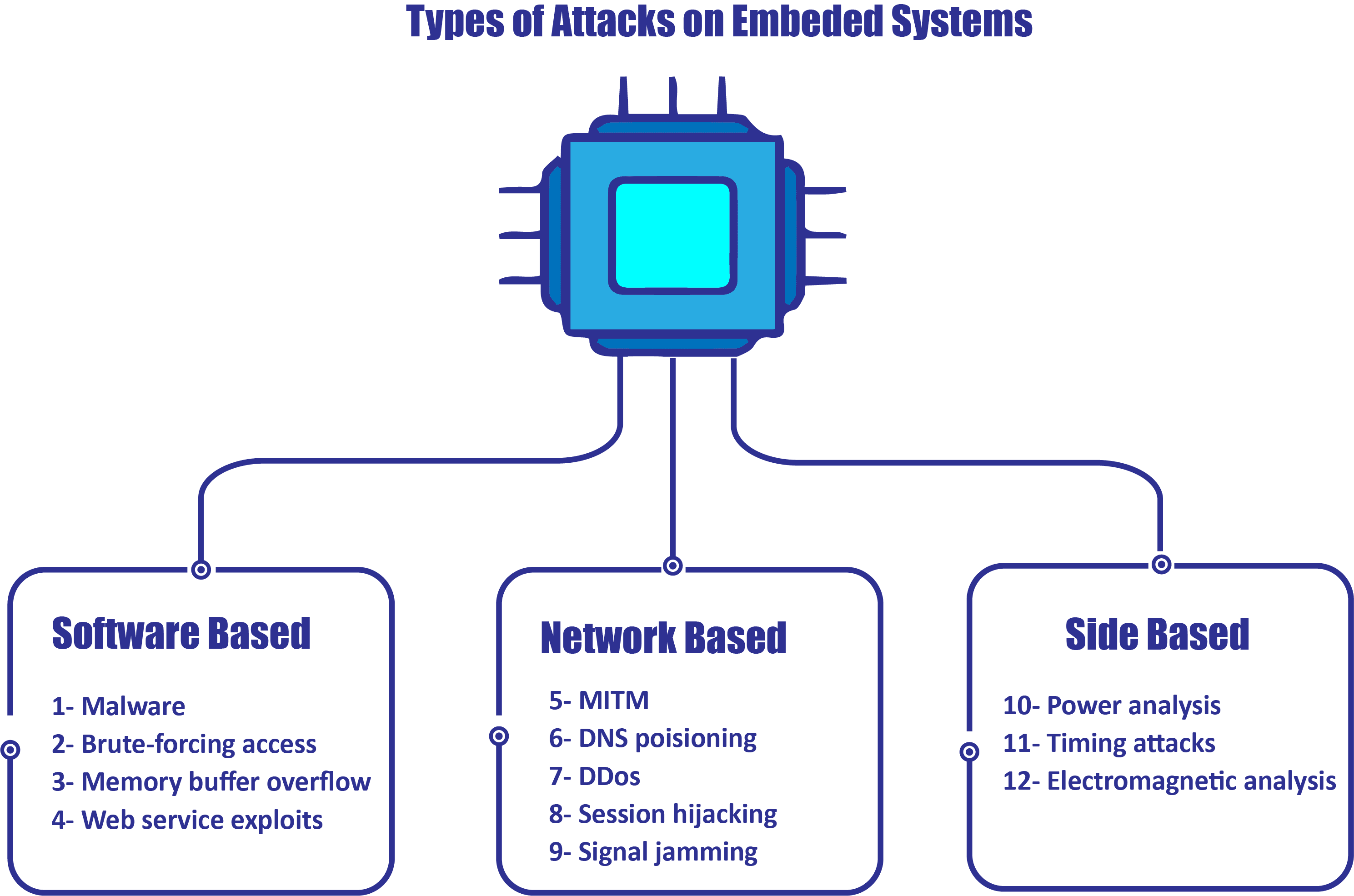
The devices and appliances with embedded systems are directly interconnected with the core network of the company. So, an attack won’t only compromise the embedded system. It will take down the whole network. With the number of potential vulnerabilities, embedded systems are susceptible to several types of attacks. Let us have a look at some common ones among them.
Software-Based Attacks
These attacks target the core application that manages the device. A hacker can gain access to the internal data and control of the device as well. Software-based attacks do not require any special skills from the hacker. Plus, attackers can execute them remotely.
Some software-based attacks are:
- Malware attacks: Hackers initiate malware attacks by intercepting the app data with a piece of malicious code. It affects the embedded systems as it affects other systems. Attackers usually deliver malware through fake firmware updates, drivers, or security patches. During a successful malware attack, the victim loses control over the embedded systems and might lose the relevant data as well.
- Brute-forcing: It is the process of guessing the access credentials of the embedded systems. Hackers typically exploit the graphical user interface provided by most embedded systems. You must put in strong passwords that are hard to crack in order to prevent brute-forcing. Pro tip is to limit the number of login attempts.
- Memory Buffer Overflow: In this type of attack, hackers exploit the system vulnerabilities to swamp the device’s memory. Attackers manually fill the memory buffer allocated to contain the moving data inside the embedded systems. The OS of the embedded system will attempt to record some data in the memory section next to the buffer. But, eventually, it will fail.
Network-Based Attacks
Hackers initiate these types of attacks by exploiting the vulnerabilities within the victim’s network infrastructure. Through these hacks, attackers can monitor and intercept all the network traffic transmitted to or from the embedded systems.
Some common network-based attacks are:
- Man in the Middle Attack: Here the attacker sits between the sender and the receiver and intercept or alter the data transmitted. Hackers exploit the weaknesses in the connection between two devices and place the third one between them. Then they try to get access to the cryptographic key used by both the devices to eavesdrop.
- DNS Poisoning: Attackers exploit the DNS server’s vulnerabilities to reroute from the targeted website to another one.
Along with these major network-based attacks, the following are some more attacks you need to be aware of:
- DDoS (Distributed Denial of Service) Attacks
- Session Hijacking
- Signal Jamming
Side Channel Attacks
These are the attacks initiated by exploiting the hardware security flaws. It is the hardest to execute and the most expensive one for the victims as well. Embedded Cyber Security teams face a tough time mitigating the side-channel attack.
Common side-channel attacks are:
- Power Analysis: This attack is orchestrated by physical access to an embedded system. Hackers probe the internal connections and detect changes in power consumption.
- Timing Attacks: These attacks are planned according to the timing of embedded system operations. Hackers need to have a deep knowledge of the embedded system architecture and should also have physical access to the device.
- Electromagnetic Analysis: In these attacks, hackers use electromagnetic signals to analyze emissions from a device. They use it to figure out cryptographic operations and even extract secret keys.
How to prevent your embedded systems from attacks?
The following are some Embedded Cyber Security tips to prevent embedded systems from hacking:
- Always have your sensitive data and applications secured with strong cryptographic keys.
- Start your embedded systems with a secure boot.
- Avoid letting Unauthorized Software Access.
- Never ignore misconfigurations or isolation mechanisms.
- Consult with an expert in Embedded Cyber Security to reduce your attack surface.
Before your Go!
- Embedded systems are susceptible to attacks on both software and hardware fronts.
- To ensure Cyber Security Embedded Systems, you need to have fortified hardware and software configurations.
- Consider consulting an expert instead of doing it yourself. An expert will provide you with the best input to safeguard your embedded systems from cyber-attacks.
Praveen Joshi
Praveen is a seasoned IT Solutions Leader and Director at RSK Business Solutions, a technology-driven IT Consulting Company that specializes in Bespoke Software Development, Agile Consulting, Mobile App Development, Smart Sourcing, and much more. For the last 17 years, he has been delivering quality custom IT solutions that help businesses achieve their goals.
Related Posts

Posted By RSK BSL Tech Team on August 14th, 2026
Enterprise AI Development Services for Modern Businesses: A UK Buyer’s Guide for 2026

Posted By RSK BSL Tech Team on August 11th, 2026
Agentic AI Explained: Benefits, Use Cases & Examples

Posted By RSK BSL Tech Team on August 8th, 2026
Hire AI Engineers in the UK: Cost, Skills & Process in 2026

Posted By RSK BSL Tech Team on August 5th, 2026