
 Share
Share Post
Post Tweet
Tweet Copy
CopyRelated Articles

Artificial Intelligence
RSK BSL Tech Team
August 20, 2026
|
|

Artificial Intelligence
RSK BSL Tech Team
August 17, 2026
|
|

Artificial Intelligence
RSK BSL Tech Team
August 14, 2026
|
|

Artificial Intelligence
RSK BSL Tech Team
August 11, 2026
|
|

IT Outsourcing
RSK BSL Tech Team
August 8, 2026
|
|
Artificial Intelligence
RSK BSL Tech Team
August 5, 2026
|
|

Artificial Intelligence
RSK BSL Tech Team
August 2, 2026
|
|

Artificial Intelligence
RSK BSL Tech Team
July 30, 2026
|
|

Hire resources
RSK BSL Tech Team
July 27, 2026
|
|

IT Outsourcing
RSK BSL Tech Team
July 24, 2026
|
|

Artificial Intelligence
RSK BSL Tech Team
July 21, 2026
|
|

Hire resources
RSK BSL Tech Team
July 17, 2026
|
|

Mobile Application Development
RSK BSL Tech Team
July 14, 2026
|
|

Infographics
RSK BSL Tech Team
July 11, 2026
|
|

Software Development
RSK BSL Tech Team
July 9, 2026
|
|

Hire resources
RSK BSL Tech Team
July 6, 2026
|
The Future of AI in Computer Vision: Trends and Innovations
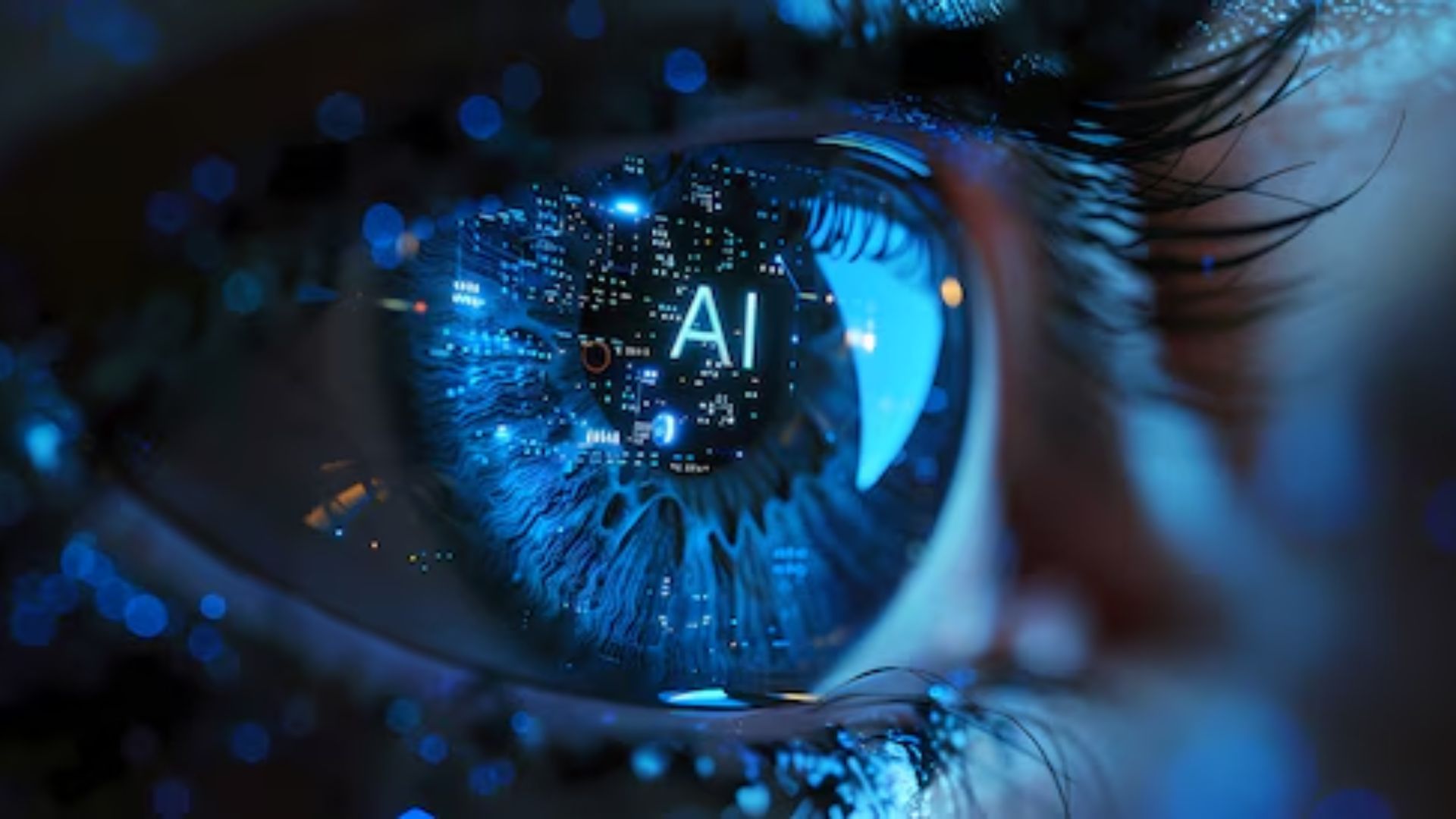
In an era where machines can not only see but also interpret and understand visual data, computer vision has emerged as one of the most transformative fields in artificial intelligence. At its core, computer vision enables computers to process, analyse, and make sense of images and videos—mimicking the way humans perceive the world.
From detecting tumours in medical scans to powering autonomous vehicles, enhancing retail experiences with smart checkout systems, and strengthening surveillance and security, computer vision is revolutionising industries across the board. As the demand for intelligent visual systems grows, so does the need to hire AI engineers who can build, train, and deploy these sophisticated models.
Current State of Computer Vision
- Object Detection: Identifying and locating objects within an image or video, used in everything from traffic monitoring to inventory management.
- Facial Recognition: Matching and verifying identities, widely used in security, smartphones, and personalised marketing.
- Image Segmentation: Dividing an image into meaningful parts, crucial for medical imaging, autonomous driving, and agricultural monitoring.
- Scene Understanding: Interpreting complex environments, enabling robots and drones to navigate and interact with the world.
These capabilities are driven by powerful deep learning architectures such as:
- Convolutional Neural Networks (CNNs): The backbone of most vision tasks, known for their ability to extract spatial hierarchies in images.
- Transformers: Originally developed for NLP, now adapted for vision tasks (e.g., Vision Transformers or ViTs) with impressive results in image classification and segmentation.
- Generative Adversarial Networks (GANs): Used to generate realistic images, enhance resolution, and create synthetic training data.
Emerging Trends in AI and Computer Vision
1. Self-Supervised and Unsupervised Learning
Traditional computer vision models rely heavily on labelled datasets, which are expensive and time-consuming to create. Self-supervised and unsupervised learning are altering the landscape by allowing models to learn from unlabelled data. This approach mimics human learning—observing patterns and making sense of them without explicit instruction.
- Impact: Reduces dependency on annotated data, accelerates training, and improves generalisation across tasks.
- Example: Meta’s DINO and Google’s SimCLR are leading self-supervised models that have shown impressive results in image understanding.
2. Vision Transformers (ViTs)
Transformers, which initially emerged for natural language processing, are now revolutionising computer vision. Vision Transformers (ViTs) process images as sequences of patches, capturing long-range dependencies more effectively than CNNs.
- Impact: Achieve state-of-the-art performance in image classification, segmentation, and object detection.
- Example: Models like ViT, Swin Transformer, and DeiT are setting new benchmarks in vision tasks.
3. Multimodal AI (e.g., CLIP, DALL·E)
Multimodal AI combines vision with other modalities like text, audio, or even touch. Tools like CLIP (Contrastive Language–Image Pretraining) and DALL·E demonstrate how models can understand and generate images based on textual descriptions.
- Impact: Enables more intuitive human-computer interaction, cross-modal search, and creative applications.
- Example: CLIP can match images with textual queries, while DALL·E can generate images from prompts like “a futuristic cityscape at sunset.”
4. Edge AI and Real-Time Processing
With the rise of IoT and mobile devices, there’s a growing need to run vision models directly on edge devices—without relying on cloud infrastructure. Edge AI enables real-time processing with lower latency and improved privacy.
- Impact: Powers applications like smart cameras, AR glasses, and autonomous drones.
- Example: NVIDIA Jetson and Google Coral are popular platforms for deploying vision models at the edge.
5. Synthetic Data and Simulation Environments
Creating diverse and high-quality training data is a major bottleneck. Synthetic data—generated using simulations or GANs—offers a scalable solution. It allows for controlled environments, rare scenarios, and perfect annotations.
- Impact: Enhances model robustness, especially in safety-critical applications like autonomous driving.
- Example: Unity and Unreal Engine are used to simulate environments for training vision models.
6. Explainable AI (XAI) in Vision Systems
Explainability is essential as AI systems grow increasingly complicated, particularly in regulated sectors like healthcare and banking. Explainable AI (XAI) enables consumers to comprehend the reasoning behind a model’s decisions.
- Impact: Builds trust, ensures accountability, and aids in debugging and model improvement.
- Example: Techniques like Grad-CAM and LIME visualise which parts of an image influenced a model’s prediction.
Innovations and Breakthroughs
1. AI Models That Understand Video and 3D Environments
While traditional models focus on static images, the future lies in dynamic understanding. New AI systems can now interpret temporal sequences and 3D spatial data, enabling deeper scene comprehension. It is Crucial for robotics, surveillance, and immersive media.
Example: Models like Meta’s Ego4D and Google’s Video Poet can analyse video content, track motion, and even predict future frames.
2. Integration with AR/VR and Spatial Computing
Computer vision is a fundamental component of augmented reality (AR) and virtual reality (VR). With spatial computing, AI can map and interact with real-world environments in real time. Enhances user experiences in gaming, remote collaboration, and industrial training.
Example: Apple Vision Pro and Microsoft HoloLens use advanced vision systems for gesture recognition and spatial awareness.
3. AI-Powered Medical Imaging Diagnostics
AI is transforming healthcare by improving the accuracy and speed of medical image analysis. Vision models have the ability to detect irregularities in X-rays, MRIs, and CT scans with expert precision. Reduces diagnostic mistakes and expedites treatment planning.
Example: Tools like Google’s DeepMind and Zebra Medical Vision assist radiologists in diagnosing diseases like cancer, pneumonia, and fractures.
4. Autonomous Vehicles and Smart Surveillance
Computer vision is at the heart of self-driving cars, enabling them to detect lanes, pedestrians, and obstacles. Similarly, smart surveillance systems use AI to monitor environments and detect unusual behaviour. Enhances safety, efficiency, and situational awareness in transportation and security.
Example: Tesla’s Autopilot and Waymo’s autonomous systems rely heavily on real-time vision processing.
Challenges and Ethical Considerations
1. Bias in Training Data
The quality of AI models depends on the quality of the data they are trained on. If datasets are skewed or lack diversity, models can exhibit bias, leading to unfair or inaccurate outcomes.
Example: Facial recognition systems have shown higher error rates for people with darker skin tones.
Solution: Use diverse datasets and implement fairness-aware training techniques.
2. Privacy Concerns
The increased adoption of facial recognition and surveillance technologies has raised issues regarding privacy and permission. Unauthorised data collecting can result in misuse and the loss of civil liberties.
Example: Public backlash against facial recognition in public spaces and retail environments.
Solution: Implement strict data governance, anonymisation, and opt-in policies.
3. Regulatory and Legal Implications
As AI systems gain autonomy, concerns regarding accountability, transparency, and compliance emerge. Governments and organisations are working to establish frameworks for responsible AI use.
Example: The EU’s AI Act and similar regulations aim to classify and control high-risk AI applications.
Solution: Stay informed about legal requirements and build systems with explainability and auditability in mind.
Future Outlook
Predictions for the Next 5–10 Years
- Hyper-personalised AI: Vision systems will adapt in real time to individual users, enabling more intuitive interfaces in AR/VR, healthcare, and retail.
- Generalist vision models: Like GPT for language, we’ll see large-scale vision models capable of performing multiple tasks across domains with minimal fine-tuning.
- Human-AI collaboration: Vision systems will become co-pilots in creative, industrial, and scientific workflows—assisting rather than replacing human expertise.
Role of Quantum Computing and Neuromorphic Chips
- Quantum computing could revolutionise how we train and optimise vision models by solving complex problems exponentially faster.
- Neuromorphic chips, inspired by the human brain, will enable ultra-efficient, low-power vision processing—ideal for edge devices and wearables.
Democratisation of Computer Vision Tools
The future of computer vision isn’t just about cutting-edge research—it’s about accessibility. Open-source frameworks, no-code platforms, and cloud-based APIs are making it easier than ever to build and deploy vision applications.
- Impact: Startups, educators, and small businesses can now leverage powerful vision tools without deep technical expertise.
- Opportunity: This democratisation is fuelling demand for AI developers for hire who can customise and scale these tools for specific use cases.
Conclusion
Computer vision is no longer a futuristic concept—it’s a present-day powerhouse reshaping how we live, work, and interact with technology. However, with great power comes great responsibility. Addressing ethical concerns, ensuring fairness, and building transparent systems will be crucial to realising a future where AI vision benefits everyone.
Whether you’re a business leader exploring new opportunities or a startup building the next big thing, now is the time to invest in this transformative technology and to find the right AI developers for hire who can bring your vision to life.
Related Posts

Posted By RSK BSL Tech Team on August 20th, 2026
AI Chatbot Development Services: Features, Cost & Benefits

Posted By RSK BSL Tech Team on August 17th, 2026
AI Strategy Consulting: How to Successfully Implement AI
Posted By RSK BSL Tech Team on August 14th, 2026
Enterprise AI Development Services for Modern Businesses: A UK Buyer’s Guide for 2026
Posted By RSK BSL Tech Team on August 11th, 2026