
 Share
Share Post
Post Tweet
Tweet Copy
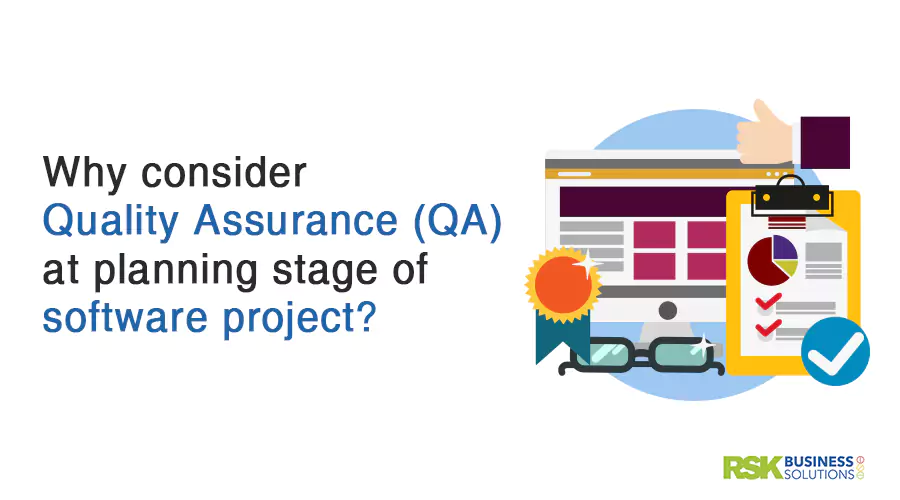
CopyQuality Assurance (QA) is a vital component of the software development life cycle (SDLC). QA helps to build consumer trust and save money in the long term – and raises software standards. Contrary to popular belief, QA is not the final step in the development cycle and can be implemented in various stages of the process.
Related Articles

Artificial Intelligence
RSK BSL Tech Team
August 14, 2026
|
|

Artificial Intelligence
RSK BSL Tech Team
August 11, 2026
|
|

IT Outsourcing
RSK BSL Tech Team
August 8, 2026
|
|

Artificial Intelligence
RSK BSL Tech Team
August 5, 2026
|
|

Artificial Intelligence
RSK BSL Tech Team
August 2, 2026
|
|

Artificial Intelligence
RSK BSL Tech Team
July 30, 2026
|
|

Hire resources
RSK BSL Tech Team
July 27, 2026
|
|

IT Outsourcing
RSK BSL Tech Team
July 24, 2026
|
|

Artificial Intelligence
RSK BSL Tech Team
July 21, 2026
|
|

Hire resources
RSK BSL Tech Team
July 17, 2026
|
|

Mobile Application Development
RSK BSL Tech Team
July 14, 2026
|
|

Infographics
RSK BSL Tech Team
July 11, 2026
|
|

Software Development
RSK BSL Tech Team
July 9, 2026
|
|

Hire resources
RSK BSL Tech Team
July 6, 2026
|
|

IT Outsourcing
RSK BSL Tech Team
July 3, 2026
|
|

Artificial Intelligence
RSK BSL Tech Team
July 1, 2026
|
Why consider Quality Assurance (QA) at planning stage of software project?
Quality Assurance (QA) is a vital component of the software development life cycle (SDLC). QA helps to build consumer trust and save money in the long term – and raises software standards. Contrary to popular belief, QA is not the final step in the development cycle and can be implemented in various stages of the process.
It is important that the development manager consider QA in the planning stage of the development cycle. This is true because the manager must decide what kinds of testing will be relevant, and when. There are various types of QA testing. But how do you know what you need?
Types of Quality Assurance
- Automation Testing –This type of QA refers to testing using automated agile development consulting to check out your code. This kind of technique can become expensive, but it does not offer user experience stories.
- Manual Testing – This form of testing involves using actual people to manually test your software. This can be a slower process, but you can get much more insight on how the software would be used.
- Black Box Testing–This testing method is when you look at the functionality of your software only. At this stage, you don’t even look at internal code. You are just seeing how it works.
- White Box Testing–In this version of testing, you look at the internal code and workings of the application instead of how it functions.
- Integration Testing–This method of nearshore software development testing occurs when you test different parts of the software together to ensure complete compatibility.
- Functional Testing–This version of testing is perhaps more familiar to most companies. In functional testing, the goal is to make sure that the software has all the required functions.
- UI/UX Testing– Here we are testing whether or not the users will be able to actually intuitively use the software. It is often tempting to skip this step, but it is crucial! If users can’t understand how to use your product, you are likely to lose them. Furthermore, a good UX designer and testing service may uncover new but essential features for your product.
- Regression Testing–You would use regression testing to ensure that new code is compatible with older versions. This is also very common for most companies.
- Loan/Performance Testing – The goal in this testing method is to discover the limits of the online timesheet software in order to plan accordingly and make any possible adjustments.
When should I use QA?
As you can imagine, you can use the different forms together or at various times in the development process. For example, UI/UX testing should be done early on, before the front-end is even coded! And it should be done with manual testing – with individuals sitting down and discovering the software with little prompting.
Integration testing, however, should be attempted only after the major components have been completed. You may benefit from using black box testing after white box testing, as you may want to clean up the code before looking at functionality.
Functional and performance testing are likely to be the final stops in your QA journey. But that isn’t the end. And automatic testing may be a good way to run through your program, especially if it is especially large.
Conclusion
As we have seen, QA is hardly the final step in the development process. It can be recursive and you may end up employing several techniques before releasing the final version of your software. No matter how you end up using QA in your process, it remains a vital component of software development outsourcing companies and it better ensures customer satisfaction.
Related Posts

Posted By RSK BSL Tech Team on August 14th, 2026
Enterprise AI Development Services for Modern Businesses: A UK Buyer’s Guide for 2026
Posted By RSK BSL Tech Team on August 11th, 2026
Agentic AI Explained: Benefits, Use Cases & Examples

Posted By RSK BSL Tech Team on August 8th, 2026
Hire AI Engineers in the UK: Cost, Skills & Process in 2026
Posted By RSK BSL Tech Team on August 5th, 2026